Running out of gas in Phoenix feels different than it does in milder parts of the country. The heat changes the stakes. So does the sprawl. A driver can be only a few exits from home and still be stuck in a place with little shade, fast traffic, and a long walk to the nearest station. If it happens on Loop 101, I-10, US-60, or a busy arterial road in the East Valley, the problem stops being a simple inconvenience and starts becoming a safety issue.
That is why emergency fuel delivery matters more than many drivers realize. A service that brings fuel directly to your location can keep you out of traffic, off the shoulder, and away from a long walk in dangerous temperatures. It also often connects to broader mobile roadside assistance, which matters if the empty tank is only part of the story. Sometimes a vehicle that appears to be out of gas also has a weak battery, a flat tire, or another issue that keeps it from getting moving again.
For Phoenix drivers, the smartest approach is not just knowing that fuel delivery near me exists. It is knowing when to call, what to do while you wait, how to describe your location clearly, and how to reduce the odds of getting stranded in the first place.
Why running out of fuel in Phoenix can turn serious fast
Phoenix teaches drivers to respect exposure. On a mild day, a fuel mistake costs time and money. On a triple-digit afternoon, especially when the sun is beating down on dark asphalt and there is no shoulder shade, it can become physically draining within minutes. Families with children, older adults, and anyone with a medical condition are at higher risk. Pets are vulnerable too.
There is also the road design. Many Phoenix-area routes move fast, and not every shoulder gives you much room. On some stretches, stepping out of the vehicle is more dangerous than staying inside. I have seen drivers assume they can jog to the next gas station, only to realize that the route includes frontage roads, barriers, or long signal cycles that make the trip much harder than it looked on a map.
The Valley’s size adds another layer. In central Phoenix, a gas station may be relatively close. In outlying areas, industrial zones, or newer suburban corridors, the distance can be longer than expected. Drivers searching for roadside assistance near me often do so after they have already spent too much time trying to solve it alone.
The first five minutes matter
If your car sputters, loses power, or you know the tank has gone dry, your first job is to get to the safest possible position. If the vehicle is still rolling, use that momentum wisely. Signal early, steer smoothly, and move as far right as conditions allow. A wide shoulder, parking lot, side street, or even the entrance to a business can be much safer than stopping in a live lane or on a narrow edge.
Once stopped, turn on your hazard lights. If it is safe to exit and you have room, place yourself away from traffic. If the location feels exposed, stay in the vehicle with the doors locked and call for emergency roadside assistance. In Phoenix, the safest choice is often to remain inside with the air off rather than wander in open heat. If you have drinking water, sip it. Conserve phone battery. A stranded driver with a dead phone turns a manageable problem into a harder one.
One detail people forget in the moment is that “out of gas” is not always obvious to the person on the way to help. The dispatcher or roadside technician needs accurate information to bring the correct fuel type and enough of it to get you to a nearby station. If you drive a diesel vehicle, say that immediately. If you are in a hybrid, a work van, or a vehicle with a known fuel gauge problem, mention that too.
What to tell a fuel delivery service
The smoother your call, the faster the help usually arrives. A good emergency fuel delivery request gives the provider everything needed to locate you and complete the job without back-and-forth delays.
- Your exact location, including highway, direction of travel, nearest exit, mile marker, or business name Your vehicle make, model, color, and fuel type A callback number and whether your phone battery is low Whether you are in a safe spot or stuck in a live traffic area Any related issue, such as a dead battery, flat tire assistance need, or lockout problem
That last point matters more than people expect. A surprising number of calls start as fuel delivery and end as something else. Maybe the driver ran the battery down trying to restart the car repeatedly. Maybe the spare tire is flat too, so flat tire repair near me becomes the next search. Maybe the keys were locked inside during the stress of the stop, which turns it into a car lockout service near me request or a vehicle lockout service call. A capable mobile roadside assistance provider can often handle several problems in one visit, or at least diagnose the next step.
Why “just bring a gas can” is not always the best answer
Friends and family mean well, but private rescue is not always the safest option in Phoenix. People picture a quick trip with a red can in the trunk. Then they realize they do not know exactly where the stranded vehicle is, or they do not have an approved fuel container, or they arrive and there is nowhere safe to pull over. I have seen these well-meant efforts create a second stranded car and double the risk on the roadside.
A professional roadside assistance Phoenix provider usually has procedures for working along freeways and high-traffic roads. The driver understands where to stop, how to approach the vehicle, how to verify the fuel type, and what to do if the situation is more complicated than a simple empty tank. That matters when the shoulder is narrow or the vehicle sits on a curve where visibility is poor.
There is also the simple issue of time. A friend leaving work across town during rush hour may take far longer than a local emergency roadside assistance near me service that already has units moving in the area.
Phoenix has a few patterns that catch drivers off guard
One common pattern is the “I had enough to get there” mistake. A driver knows the route to a destination, but not the route away from it. Construction detours, missed exits, and backups can add unexpected miles. So can long idling periods with the air conditioning running hard.
Another pattern is the unreliable fuel gauge. In older vehicles, especially ones with a history of sending unit or sensor issues, the last quarter tank can be fiction. Drivers who live with a quirky gauge often get away with it for months, then lose that gamble at the worst possible time.
Then there is the habit of pushing past the warning light because a station is “close enough.” In Phoenix, close enough is a risky phrase. A station may be nearby as the crow flies, but not roadside assistance Gilbert AZ easily reachable from your current roadway. A few extra miles on paper can turn into a much longer drive with one-way roads, medians, frontage turns, or blocked access.
This comes up often in the East Valley. Someone heading through Mesa, Chandler, or looking for roadside assistance Gilbert AZ might pass familiar retail corridors and assume gas is always around the corner. Usually it is, until a late-night hour, a closed station, or a packed event route changes the equation.
How long does emergency fuel delivery take?
There is no honest one-size-fits-all answer. Response time depends on traffic, weather, distance, call volume, and whether your vehicle is on a freeway shoulder, in a parking garage, or tucked into a neighborhood where addresses are confusing. In practical terms, many drivers care less about the exact minute count and more about whether someone is truly on the way.
If you are calling roadside assistance Phoenix during weekday rush hour or a summer afternoon with high service demand, expect variability. A provider that gives realistic timing is better than one that promises an unrealistically fast arrival just to secure the call. The same goes for pricing. You want clarity on service fees, fuel charges, and whether the amount delivered is enough to get to the nearest station rather than fill the tank completely.
Most emergency fuel delivery services bring enough gas to get you back on the road and to the closest reasonable station. That is standard and sensible. The goal is not to top you off on the shoulder of a freeway. It is to get you out of a vulnerable situation safely.
Staying safe while you wait
The waiting period is where judgment matters. Drivers often get restless and start making bad decisions ten minutes in. They leave the vehicle to stand closer to traffic, walk in direct sun, or attempt a risky push. If you are in a safe position, resist the urge to improvise.
Keep your hazard lights on. If the engine is off and you are concerned about preserving battery, use them as needed, but do not leave yourself invisible. Crack a window if conditions allow. If you have passengers, keep everyone calm and inside unless the environment is clearly safer outside the vehicle and far from traffic. If your phone charge is dropping, lower screen brightness and avoid unnecessary app use.
If the stop is on a freeway shoulder and you do not feel safe, call 911. That is not overreacting. A stranded car in a dangerous lane position can become an immediate traffic hazard.
When empty fuel is not the only problem
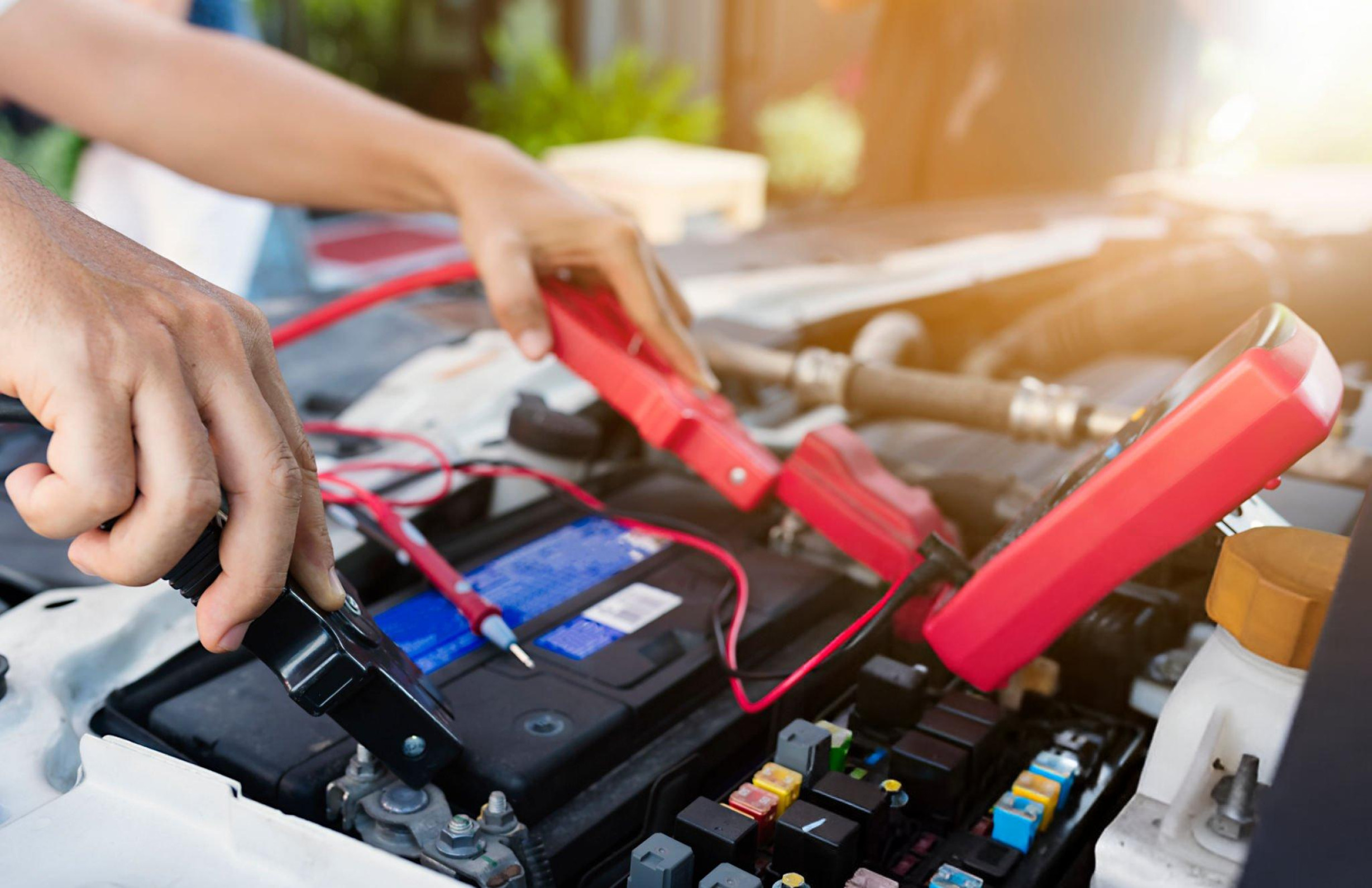
A lot of roadside calls come bundled. A driver runs out of gas, then drains the battery trying to restart repeatedly. At that point, fuel alone will not solve it. You may also need jump start service near me or a full car jump start service. In summer, heat puts stress on batteries that are already near the end of their life. It is not unusual for the low-fuel event to expose a separate electrical weakness.
The same applies to tire issues. Some drivers pull over after the vehicle starts struggling and notice a tire is low or damaged as well. Then the search shifts from emergency breakdown service to flat tire assistance. In a best-case scenario, a mobile roadside assistance company can send one technician equipped for both. In a less efficient setup, you may end up waiting twice.
Lockouts happen too. Stress makes people rush. They step out to inspect the car, hit the lock button accidentally, and now they need fuel plus a vehicle lockout service. That is one reason experienced dispatchers ask broader questions instead of assuming the first problem is the only one.
A realistic look at cost
Drivers often hesitate to call because they assume emergency fuel delivery will cost far more than it actually does. Prices vary by provider, location, distance, and fuel amount, but the real comparison should not be against the price per gallon at a retail pump. It should be against the cost of a bad roadside decision.
Walking in extreme heat, leaving a vehicle in a dangerous spot, missing work for hours, or creating damage through repeated no-fuel restarts can all cost more than the service call. If you have roadside coverage through your auto insurer, motor club, credit card benefits, or vehicle warranty, fuel delivery may already be partially covered. It is worth checking before you need it, not while stranded.
The same advice applies to broader roadside assistance near me coverage. A plan that includes towing, lockout help, jump starts, flat tire repair near me support, and fuel delivery near me often pays for itself the first time something goes wrong in Phoenix summer.
The difference between city streets and freeways
Not all fuel-related breakdowns should be handled the same way. On local streets, especially if you can coast into a lot or side street, the situation is usually straightforward. You have more room, better visibility, and less pressure from passing traffic.
Freeways are another matter. On a narrow shoulder with vehicles moving at full speed, every minute feels longer and every movement carries more risk. If you are on a major highway, give the dispatcher every directional detail you can. Eastbound versus westbound matters. So does whether you are before or after an exit, on the mainline or a frontage road, and near which landmark or overpass.
A surprising number of delays happen because a stranded driver says, “I’m on the 10 near the 17,” which can mean several very different places depending on ramps and direction of travel. Good location details can save significant time.
Practical habits that prevent most fuel emergencies
Many fuel emergencies are preventable, but only if the habit is realistic. Telling yourself you will never let the tank drop below half sounds nice and rarely survives real life. Better to build a few practical rules you can actually follow.
- Refill when you reach a quarter tank, especially from May through September Never trust a known bad fuel gauge without tracking mileage Keep at least one phone charger in the vehicle Save a reputable roadside assistance Phoenix contact before you need it If you drive long routes often, carry water and basic summer emergency supplies
That quarter-tank rule is the one I recommend most often in the Valley. It gives you margin for traffic, detours, closed stations, and the simple reality that a fuel warning light tells you less than many drivers think. One car may have a comfortable reserve when the light comes on, another may have very little. Treat the light as a cue to refuel now, not soon.
Choosing the right roadside help in the Phoenix area
When drivers search emergency roadside assistance near me, they often focus only on who can come fastest. Speed matters, but so do capability and communication. You want a service that answers clearly, asks the right questions, and gives practical arrival updates. A provider handling roadside assistance Gilbert AZ may also cover broader Valley routes, which is useful if your travel crosses city lines regularly.
Ask simple, direct questions. Do they provide emergency fuel delivery? What fuel types can they bring? Can they also handle jump starts or lockouts if needed? Do they service freeway shoulders? What is the expected charge structure? A professional company should be able to answer without vague language.
Local familiarity counts. Phoenix is not one uniform driving environment. Downtown streets, airport approaches, suburban arterials, and outer-loop corridors all bring different access challenges. A team that works these roads every day is less likely to get lost or underestimate the difficulty of reaching your exact location.
What drivers usually regret
Most regrets are small decisions made under stress. Waiting too long to stop safely. Walking away from the vehicle too soon. Assuming a friend will get there faster. Failing to mention diesel. Not charging the phone before a long drive. Ignoring a fuel gauge that has been lying for months.
The best roadside calls are the boring ones. The driver gets to a reasonably safe spot, provides clear location details, requests fuel delivery near me or emergency breakdown service as needed, and waits patiently. The vehicle gets enough fuel to reach a station, the driver tops off properly, and the day moves on.
That is really the point of emergency fuel delivery in Phoenix. It turns a risky, exposed situation into a controlled one. It gives stranded drivers a safer option than wandering along hot pavement or hoping a quick fix appears. When it is handled well, it feels almost uneventful, which is exactly how roadside help should feel.
If you drive often in the Valley, save the number of a trusted mobile roadside assistance provider before you need it. It is one of those simple preparations that seems forgettable until the gauge drops lower than expected, traffic slows to a crawl, and the nearest station is no longer as close as it looked.
Our Sponsor
EZ3 Roadside Rescue Services
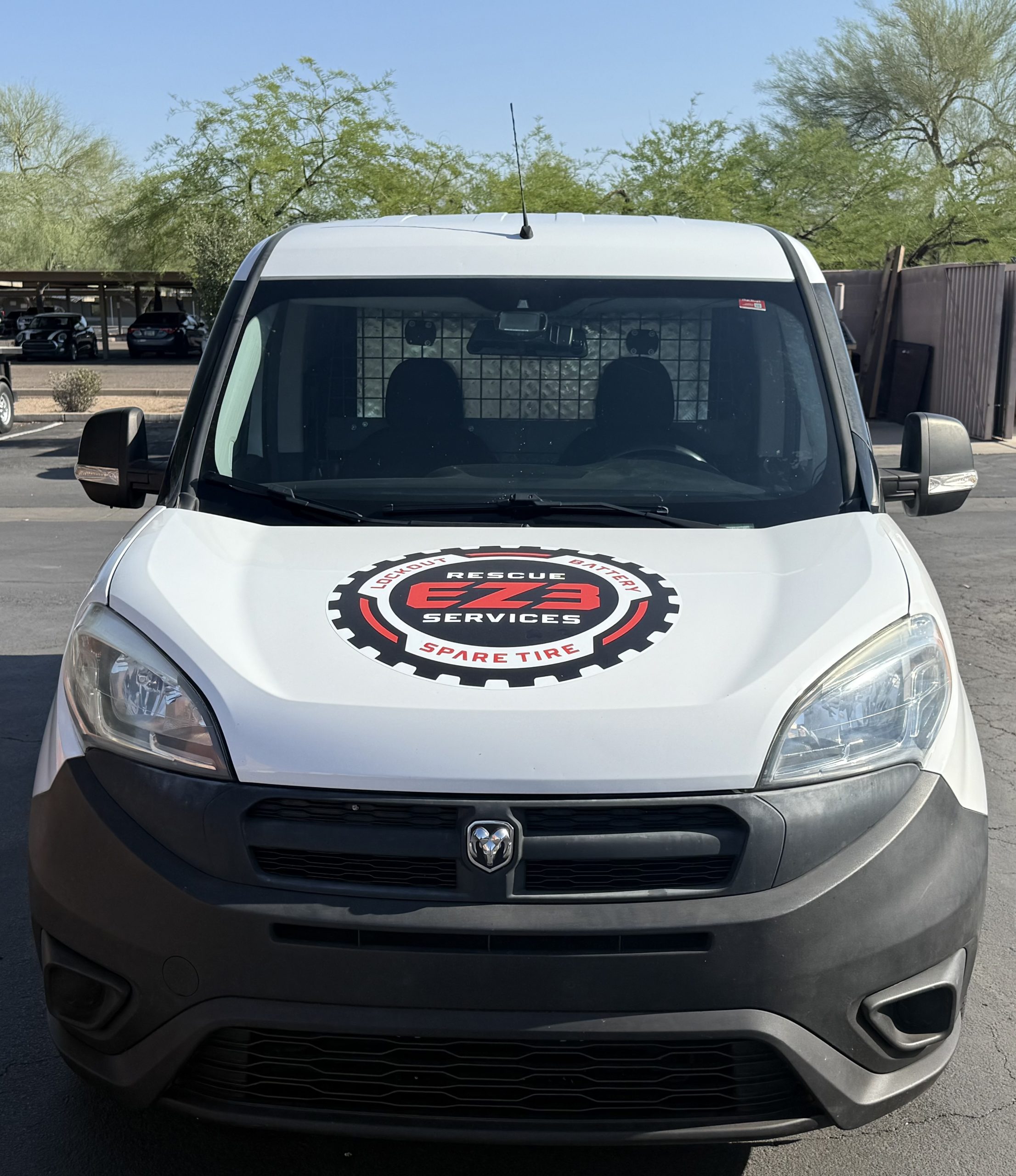
EZ3 Roadside Rescue Services is a Gilbert-based roadside assistance provider serving drivers throughout Gilbert and the greater Phoenix, Arizona area. The company provides fast, professional roadside assistance for common vehicle emergencies, including flat tire repair and tire changes, battery jump starts, emergency fuel delivery, vehicle lockout assistance, lug nut removal, battery replacement, and emergency breakdown assistance. EZ3 Roadside Rescue Services is available 24/7 to help stranded motorists get safely back on the road.
Address:
922 N Colorado St,
Gilbert,
AZ
85233,
United States
Phone: (480) 710-5902
Business Hours:
- Open 24/7 — Emergency Roadside Assistance Available
Follow Us: